
Top Attractions You Must See in Hyderabad, Sindh (2026)
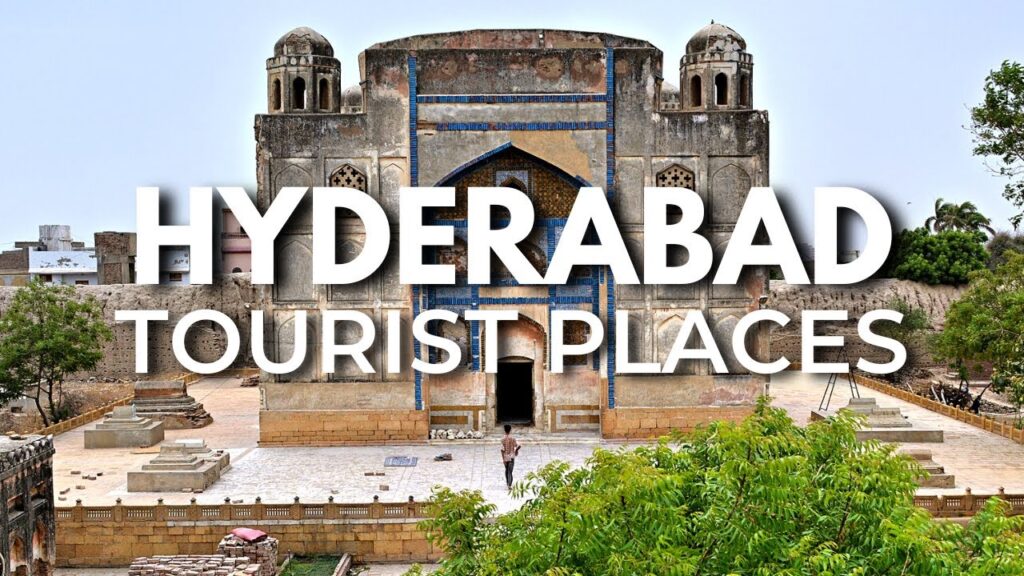
Most travellers treat Hyderabad as a fuel stop. Two hours out of Karachi on the way north, worth a biryani and a leg stretch, back on the motorway by three.
That is a waste of a city that was the capital of Sindh for 75 years, still makes most of Pakistan’s glass bangles, and holds one of the longest continuous bazaars in Asia.
It is also a city that needs an honest guide rather than a glossy one, because a couple of its famous attractions are not what the listicles suggest. Here is the real version.
A quick history, because it explains the layout
Hyderabad was founded in 1768 by Mian Ghulam Shah Kalhoro, on the site of a much older settlement called Neroon Kot. He named it after Hazrat Ali, known also as Hyder.
Under the Kalhora and then the Talpur dynasties it ran Sindh. That ended in 1843, when the British defeated the Talpurs at the Battle of Miani and annexed the province. The capital moved to Karachi and never came back.
What Hyderabad kept was industry and craft. Glass bangles, Ajrak block printing, Sindhi topi, embroidery. Those are still made here, and they are still the best reason to walk the bazaar.
Pakka Qila: read this before you go
Every guide to Hyderabad leads with Pakka Qila, the fort Ghulam Shah Kalhoro built in 1768. Most of them describe it as though you can wander the ramparts.
You cannot. Pakka Qila is a neighbourhood.
After Partition, refugee families were settled inside the fort walls and were never rehoused. Today it is densely populated. Residents have built kitchens and bathrooms into the fortification walls, and the constant water has weakened them badly. Sections have collapsed. Drainage is poor, rubbish accumulates, and tailors, cobblers and tuition centres operate out of rooms in the structure.
Restoration has been promised repeatedly and has largely not happened.
So what is actually worth doing there? Walk the surrounding lanes. The old-city architecture, the carved balconies and the gateways are genuinely striking, and it is a living neighbourhood rather than a preserved set. Many visitors go up to the shrine of Makki Shah on the fort hill. Go with someone local, go in daylight, and go understanding that people live there. It is not a monument to be photographed at leisure.
Nearby, Kacha Qila, the older mud fort, is in a similar state of decay and gets almost no visitors at all.
Rani Bagh
Built in 1861 and named for Queen Victoria, Rani Bagh is the city’s main green space and the most reliable family outing in Hyderabad.
It is divided into four sections and holds:
- A boating lake with paddleboats for hire
- A small zoo
- The Eidgah, an open-air mosque with distinctive pink minarets, used for Eid prayers
- Jogging tracks, lawns and children’s play areas
- A fishing pond and a cluster of food kiosks
An honest note on the zoo: it is run-down. The collection is limited, mostly monkeys, crocodiles and birds, with no big cats or bears, and conditions are basic by international standards. If animal welfare matters to you, skip that section and enjoy the gardens, which are pleasant.
Go late afternoon. Mornings are hot and the park fills up properly after four.
Sindh Museum
In Qasimabad, near Rani Bagh, and the single best hour you can spend in the city.
The collection runs chronologically through Sindh: Indus Valley material, then the Sama, Sumra, Kalhora and Talpur periods. Pottery, coins, manuscripts, textiles, jewellery and musical instruments, with life-size dioramas of village life, weddings and festivals.
Do this before you visit anything else. The bazaar and the tombs make far more sense once you have the sequence of dynasties straight, and it costs almost nothing.
Tombs of the Talpur Mirs
Over in Hirabad, these are the mausoleums of the Talpur rulers who governed Sindh until the British arrived.
The tilework is the reason to come. Blue and white faience, Persian-influenced geometry, calligraphic panels and decorated domes. Some of it has weathered badly and restoration has been patchy, but a few of the chambers are still in good condition and almost nobody else will be there.
Bring a torch. Interior lighting is unreliable, which brings us to a practical point later in this guide.
Shahi Bazaar
Frequently described as one of the longest bazaars in Asia, running roughly from Pakka Qila down to the clock tower.
This is where Hyderabad is most itself. What to look for:
- Glass bangles. Hyderabad produces the overwhelming majority of Pakistan’s bangles. Whole sections of the market sell nothing else, in every colour made.
- Ajrak. The block-printed cloth in deep crimson and indigo that is essentially the emblem of Sindh. Buy from a shop that can show you the blocks.
- Sindhi topi. The embroidered, mirror-worked cap. Paired with Ajrak it is the traditional formal dress.
- Embroidery and handicrafts, generally cheaper here than in Karachi.
Haggle. Start around half and settle near two thirds. Go in the morning before the heat builds, and expect it to be loud, crowded and slow going.
The clock tower
The Market Tower, or Ghanta Ghar, sits at the centre of the bazaar. Colonial-era, brick-built, and the landmark everyone navigates by. Worth five minutes and a photograph rather than a dedicated trip, but you will pass it repeatedly.
Al-Manzar and the riverfront
Hyderabad sits on the east bank of the Indus, and Al-Manzar Park is where the city looks at its river. Walking paths, benches, picnic spots and a decent sunset.
It is not spectacular. It is a good place to sit for an hour at the end of a hot day, which is a different and perfectly legitimate thing.
Ganjo Takkar
A limestone ridge on the edge of the city whose name means bald hill. Fossil-bearing rock, panoramic views back over Hyderabad, and some Buddhist-period remains in the vicinity.
Of real interest if you like geology or archaeology. Of limited interest otherwise. There is no visitor infrastructure at all, so take water and go with someone who knows the way.
Miani Forest
North of the city, this riverine forest reserve is where the Battle of Miani was fought in 1843, ending Talpur rule. It is also one of the better biodiversity pockets near Hyderabad, with good birdlife.
Combining the history with the birdwatching makes for a decent half day, and it is somewhere almost no guidebook sends you.
What to eat
Sindhi food is heavier on sourness and chilli than Punjabi cooking, and Hyderabad does it properly.
Sindhi biryani
The tangy one, with potatoes, dried plums and yoghurt in the masala. Sharper and hotter than Karachi biryani. Order it at a family-run place rather than a chain.
Sai bhaji
Spinach cooked down with chana dal and vegetables. Everyday home food, deeply savoury, usually eaten with rice.
Koki
Thick griddled flatbread with onion, green chilli and coriander worked into the dough. Breakfast, with yoghurt or pickle and a lot of tea.
Tuk
Twice-fried potato, crushed flat between fryings, salted and spiced. Crisp outside, soft inside. Ordered alongside biryani almost automatically.
Pallo machhi
Hilsa from the Indus, fried hard with a spice crust. Bony and worth the effort. Seasonal, so ask before you plan a meal around it.
Lassi and falooda
Sweet or salted lassi for the afternoon, falooda in the evening. Both are everywhere and both are how you survive a Hyderabad summer.
Practical planning for 2026
Getting there
Roughly 160 kilometres from Karachi, about two to two and a half hours on the M9 motorway. Regular buses and coaches run all day, trains connect through Hyderabad Junction, and driving is straightforward since the terrain is flat.
The city works well as a day trip from Karachi, or as the first stop on a run north toward Sehwan, Bhitshah and Larkana.
When to go
November to February, without hesitation. Days are mild and the bazaar is bearable.
Hyderabad is one of the hotter cities in Pakistan and summer regularly pushes past 45 degrees. April to September is genuinely unpleasant for walking a bazaar or standing at an unshaded fort.
Power cuts, which nobody warns you about
This is the practical detail that separates a good trip from a miserable one. Load shedding in Hyderabad has been running at eight to twelve hours a day through the summer of 2026.
What that means for you:
- Book accommodation that explicitly confirms a generator or solar backup, and get it in writing rather than assuming
- Carry a power bank, and charge everything whenever the power is on
- Expect lifts, air conditioning and card machines to stop without warning, so carry cash
- Interior spaces at museums and tombs can go dark, hence the torch
Winter cuts are shorter, which is another argument for going between November and February.
Where to stay
Most visitors do Hyderabad as a day trip and sleep in Karachi, which is a reasonable plan. If you are staying, the Latifabad and Qasimabad areas hold most of the decent hotels, and the Cantonment is quieter. Browse accommodation listings on Traventigo to compare.
A sensible one-day route
- Arrive from Karachi mid-morning
- Sindh Museum first, for the context
- Tombs of the Talpur Mirs
- Lunch: Sindhi biryani with tuk
- Shahi Bazaar and the clock tower, with a walk through the Pakka Qila lanes
- Rani Bagh or Al-Manzar for sunset
- Falooda, then drive back
Two days lets you add Ganjo Takkar and Miani Forest without rushing.
Frequently asked questions
Is Hyderabad Sindh worth visiting?
Yes, for history, crafts and food rather than scenery. The Sindh Museum, the Talpur tombs and Shahi Bazaar justify a full day, and it is an easy addition to any Karachi trip.
How far is Hyderabad from Karachi?
About 160 kilometres, or two to two and a half hours by road on the M9 motorway. Buses run frequently and trains also connect the two cities.
Can you go inside Pakka Qila?
The fort is an inhabited neighbourhood rather than a preserved monument. You can walk the lanes and visit the shrine of Makki Shah, but there are no ramparts to tour and much of the structure is in poor condition with families living in it.
What is Hyderabad Sindh famous for?
Glass bangles above all, since the city produces most of Pakistan’s supply. Also Ajrak block printing, Sindhi topi caps, Shahi Bazaar and Sindhi biryani.
What is the best time to visit Hyderabad Sindh?
November to February. Summer temperatures regularly exceed 45 degrees and long daily power cuts make the hot months hard going.
Worth the stop
Hyderabad will not compete with the northern valleys on beauty and it is not trying to. What it offers is a working Sindhi city with 250 years of history layered into it, craft traditions still being practised commercially, and food you cannot get done this well anywhere else.
Give it a full day rather than a lunch break. Go in winter. And take the fort for what it actually is.
More of the province: our guides to the top tourist attractions in Sindh and the most visited tourist places in Pakistan put Hyderabad in context.
Related articles

Wanderlust Chronicles: Exploring Hidden Gems Around the World
Wanderlust Chronicles In an age where popular travel destinations are often overcrowded and overexposed, more travelers are turning their attention to the road less…
Read article
Pakistan’s Free or Low-Cost Traveling and Visiting Points
Introduction Pakistan, with its diverse landscapes, ancient heritage, and rich culture, is one of the most beautiful yet underrated tourist destinations in the world.…
Read article
Top Tourist Attractions in Sindh You Must Visit (2026)
Sindh gets skipped. Most itineraries land in Karachi, spend two days, then fly north to the mountains. That is a mistake. This province holds…
Read article